
Mobilisez l’intelligence collective
Les organisations à plus fort impact seront celles qui s'appuieront sur l'intelligence collective à grande échelle
bluenove est une société de technologie et de conseil pionnière en intelligence collective massive et engagée activement dans la civic tech
Nos consultations citoyennes





























Nos offres
Découvrez nos casTémoignages de nos clients

Agnès Daoudal
Change Management Officer - CA-GIP
"Guidés par bluenove, leur expertise sur l'éditorial, le wording et la plateforme, nous avons pu construire notre consultation autour de 6 thématiques. […] Nous nous sommes lancés sur une consultation de 8 semaines pour imaginer ensemble nos nouvelles formes de travail."

Laurence Petit
Conseillère technique en charge de l’innovation au cabinet de l’Administrateur Général - CEA
"En lançant la démarche "Ambition Innovation", le CEA avait pour objectif d'utiliser l’innovation comme levier de transformation de l’organisme [...] L’implication des collaborateurs, au travers d’une démarche d’intelligence collective, nous a paru incontournable pour répondre à ces enjeux. L'accompagnement de bluenove a été essentiel dans la construction et l’évolution de cette démarche : ils disposent d'une réelle expertise en matière d’intelligence collective, s'appuyant sur une approche méthodologique robuste et éprouvée. Ce sont tous ces ingrédients qui ont fait le succès de la démarche, permettant d’embarquer le collectif et d’aboutir à la mise en œuvre d’actions très concrètes au CEA, notamment l’expérimentation d'un temps dédié à l'innovation qui avait été plébiscité par les collaborateurs."

Laurent-Eric Le Lay
Directeur des sports France Télévisions
"
Un grand merci aux équipes de Bluenove pour leur accompagnement dans la construction et la réalisation du séminaire de la Direction des Sports de France Télévisions.
Le professionnalisme, la convivialité et l’originalité de leurs propositions nous ont permis de réaliser un séminaire qui de l’avis de tous fut un succès.
"
Laura Johnson-Hill
VP Communication interne - Schneider Electric
"Bluenove apporte des capacités d'analyse très sophistiquées. Il sont capables de récupérer des données provenant de sources multiples et les traduire en contenu stratégique concret pour une organisation."

Caroline Galinier-Warrain
Head of collective Intelligence - AXA
"En donnant la parole à nos collaborateurs, à leurs problématiques locales et leurs contraintes de terrain, nous sommes parvenus à créer une cohésion autour de nos engagements sociétaux, malgré la diversité culturelle et la crise sanitaire. Le sujet qui est beaucoup revenu durant cette conversation sur notre raison d'être a été celui de la fierté."

Charlotte Thouvard
CHIEF COMMUNICATIONS OFFICER _ ACCOR GROUP COMMUNICATIONS
"bluenove, c’est une équipe engagée, professionnelle, flexible et toujours à l’écoute. Leur expertise a été un atout clé sur ce projet, nous permettant d’atteindre les objectifs que nous nous étions fixés."

Marie-Agnès Chesneau
Directrice Générale Adjointe - Fédération Nationale du Crédit Agricole
"L’intelligence collective, pouvoir entendre ce qu’attendent les différentes parties prenantes, c’est absolument indispensable si l’on veut construire quelque chose de solide. C’est beaucoup de richesse, c’est aussi de l’adhésion plus naturelle aux propositions qui sont faites."

Vincent Jouffroy
Coordinateur de la politique d'indemnisation - Fonds de garantie des victimes
"La plateforme Assembl proposée par bluenove a été un formidable moyen de recueil des retours d’expérience et des attentes de nos bénéficiaires. Cette parole a constitué le riche terreau de nos réflexions avec les différentes parties prenantes publiques et associatives de la prise en charge des victimes, dans une logique constructive d’amélioration continue des dispositifs existants. Merci à l’équipe bluenove pour leur accompagnement !"

Teddy Breyton
Gérant SCI - EMLyon business school
"L’expertise et les méthodologies de bluenove nous ont permis de consulter avec efficience les communautés des étudiants, alumni, professeurs et personnels de notre école. L’analyse qui en a été produite est venue alimenter le brief du projet d’architecture d’intérieur du futur campus d’emlyon business school à Lyon-Gerland pour contribuer à en faire une grande œuvre collective !"
Catherine Guillouard
ex-PDG - Groupe RATP
"Notre raison d'être est le fruit d'une grande mobilisation interne, avec 138 000 contributions recueillies auprès des salariés. C'était aussi l'occasion pour nous de mener une démarche en lien avec nos parties prenantes externes pour réfléchir ensemble au rôle que l'entreprise aura demain, dans la société."

Guillaume Pepy
Président du réseau Initiative France
"Le réseau s’est largement emparé de la méthode de consultation proposée par Bluenove : plus de 2000 répondants au questionnaire en ligne et 60 ateliers collectifs organisés sur la base du volontariat. Nous disposons d’un matériau très riche pour avancer dans l’élaboration d’une stratégie à 3 ans qui prenne en compte l’ensemble des points de vue et des enjeux exprimés par le terrain, c’est très puissant !"

Marine Hadengue
Assistant Professor à SKEMA Business School
"La collaboration pédagogique avec bluenove et l’accès à la plateforme Assembl et à ses modules a permis aux étudiants d’exprimer leurs opinions, de partager leurs expériences et de débattre de manière transparente et constructive. Les étudiants ont ainsi pu plonger directement dans le vif du sujet quelques jours avant le début du Hackathon, mais aussi se projeter en imaginant l’organisation inclusive en 2041 et co-construire, via un débat en ligne, les grandes problématiques à résoudre. Ces différents exercices ont permis aux étudiants d’être immergés dans la thématique pendant plus d’une semaine et de co-créer de nouvelles solutions pour les organisations inclusives de demain."

Pia Hernandez
VP Global HR Development & Community - SAFRAN Group
"La société a beaucoup changé et nous pensions que c’était le bon moment pour construire une nouvelle manière de travailler, se donner une approche plus novatrice. […] Nous voulions une manière plus intégrante où chaque personne du groupe RH avait la possibilité de s’exprimer et de contribuer à développer ce que l’on deviendra demain."
Charlie Felgate
Vision Leader - Decathlon
"L'intelligence collective fait partie de notre ADN. [...] Il est important d'avoir une vision. [...] C'est ce qui nous rassemble, nous unit. Nous avons toujours utilisé l'intelligence collective pour construire notre vision."

Isadora Guerra
Responsable du service Participation citoyenne - Métropole Rouen Normandie
"Le plus intéressant du travail fait avec bluenove est certainement l'analyse qu'ils arrivent à faire à partir de toute cette expression citoyenne. Nous avons eu recours à des outils diversifiés, et ce qui est ressorti de chaque outil n'est ni la même matière, ni les mêmes éléments. Systématiquement, ils ont réussi à faire des comptes rendus et à extraire le plus pertinent, ce qui apporte véritablement au projet."

Juliette Perchepied
Directrice de l'engagement sociétal et mutualiste - Aéma Groupe
"Je retiens de l'accompagnement de bluenove un professionnalisme constant tout au long du projet, une grande réactivité et une agilité nécessaire dans un Groupe aussi large que le nôtre. Mais aussi la qualité du conseil qui nous a été apporté pour nous accompagner tout au long de l'année 2023"
Nos principaux clients





























Nos dernières actualités
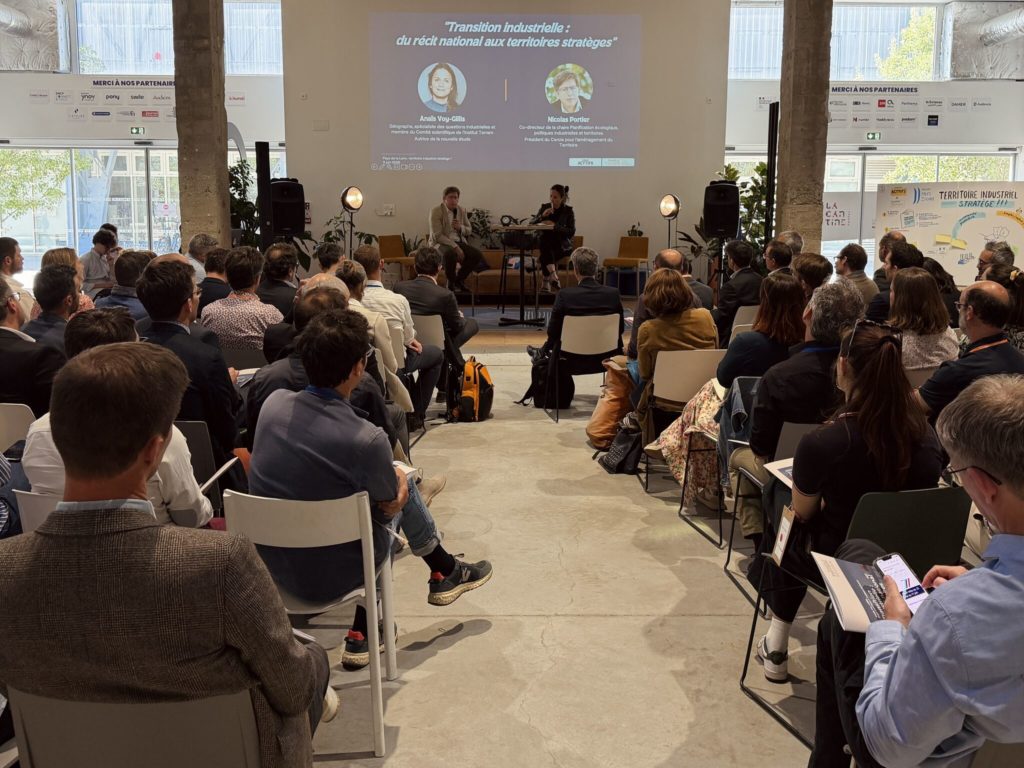
La « Voix des Territoires » prend corps à Nantes : l’acte de naissance d’un mouvement industriel stratège
Fruit de plus d’un an de travaux de réflexion menés autour de la notion de « territoire stratège », l’événement organisé le 11 juin dernier par le collectif ACCTIFS et l’Institut Terram a